DOCUMENTARIES
Black in Latin America E02, Brazil: A Racial Paradise?
In Brazil, Professor Gates delves behind the façade of Carnival to discover how this ‘rainbow nation’ is waking up to its legacy as the world’s largest slave economy. ENGLISH
Salvador da Bahia is Brazil’s most African city and their culture is thriving.
Short documentary on Salvador city and its culture (candomblé, capoeira, drums, orixás, carnaval, blocos) rooted in African roots. Serves as an overview. ENGLISH
CNN Inside Africa: Afro Brazilians From Slaves to Returnees (2017)
Short documentary on Nigerian descendants of former Afro-Brazilian enslaved people who decided to go back to Africa after the abolition of slavery in Brazil. The documentary interviews in Lagos, Nigeria, descendants of formerly enslaved Afro-Brazilian people, called returnees. ENGLISH
Brasil Brasil_ From Samba to Bossa_Part 1
BBC documentary on samba culture (from slavery to first Black musicians of Brazilian music, form samba to bossa, historical, social, political, and cultural perspectives) ENGLISH
Brasil Brasil_ From Samba to Bossa_Part 4
BBC documentary on samba culture (from slavery to first Black musicians of Brazilian music, form samba to bossa, historical, social, political, and cultural perspectives) ENGLISH
National Geographic – Inside Rio Carnaval (2007)
Follows samba school Vila Isabel’s preparation for carnival 2007.
Samba by Theresa Jessouroun (2000)
A documentary on samba dance filmed with the passistas of Mangueira samba school. Discusses the figure of the mulata (cabrocha) and queen of bateria, how different their samba is from today. PORTUGUESE
O Teu Nome não Caiu no Esquecimento by Demerval Neto
Documentary on Paulo da Portela. PORTUGUESE
A história do samba (2018)
Documentary on the history of samba. PORTUGUESE
Historiando: o candomblé
History professor Márcio Branco goes to Pedra de Guaratiba, in Rio de Janeiro. There, he has a conversation with babalorixá Márcio de Jagun. PORTUGUESE.
Brasil Brasil_ From Samba to Bossa_Part 2
BBC documentary on samba culture (from slavery to first Black musicians of Brazilian music, form samba to bossa, historical, social, political, and cultural perspectives) ENGLISH
Bezerra da Silva
Documentary on artist Bezerra da Silva. PORTUGUESE
Samba Lumière (2014) by Pedro Abib
SYNOPSIS: The story of Brazilian samba in France is very old. Since the early twentieth century, many groups, composers, singers and Brazilian singers come, especially in Paris, to spread their musical compositions, and samba is one of the genres most played. Today, there is an exciting new movement of samba in France, where we can see a lot of samba groups, formed by French musicians who want to learn to play and sing samba. PORTUGUESE AND FRENCH (English subtitles)
Fala Mangueira! (1981)
On Mangueira community, its inhabitants, its school and music. The quality isn’t great, but the images are priceless. PORTUGUESE
Documentary on Portela school
Documentary on Portela samba school. PORTUGUESE
Pierre Fatumbi Verger – Um Mensageiro entre dois Mundos by Lula Buarque de Hollanda
Documentary on the life and work of French photographer and ethnographer Pierre Verger. Narrated by Gilberto Gil, the production was directed by Lula Buarque de Hollanda and shows how, after traveling all around the world as a photographer, Pierre Verger took root in Salvador da Bahia in 1946. This is where he studied the relations and the mutual cultural influences between Brazil and the Gulf of Benin in Africa, focusing his research on candomblé. PORTUGUESE.
Brasil Brasil_ From Samba to Bossa_Part 3
BBC documentary on samba culture (from slavery to first Black musicians of Brazilian music, form samba to bossa, historical, social, political, and cultural perspectives) ENGLISH
The Spirit of Samba
Documentary on the history of samba, carnival, and Black culture. ENGLISH
A verdadeira história do samba
Documentary on the history of samba. PORTUGUESE
Mangueira, 90 anos de histórias
Personalities of Mangueira school share their memories of the school and samba. Famous names sch as Cartola, Dona Neuma, Dona Zica, Nelson Sargento, Hermínio Bello de Carvalho and Tantinho da Mangueira. PORTUGUESE
Uma breve história do samba – Ocupação Cartola (2016)
Synopsis: Nilcemar Nogueira, granddaughter of Cartola and Dona Zica, gives a brief historical review of samba. She connects real estate speculation and the eviction of black low-income families to the favelas of Rio de Janeiro with the emergence of samba. Comes in several short interviews. PORTUGUESE.
Orixás no Brasil
Documentary on the Orixás and candomblé. PORTUGUESE
As batidas do samba (2010)
Documentary on samba culture and its close ties with jongo, candomblé, its schools, its composers and protectors, its musical instruments and rhythms. Documentary told with recent and archival images, music, and testimonies from key figures of samba. PORTUGUESE
FICTION
Orfeu Negro (Black Orpheus)
In the heady atmosphere of Rio’s carnival, two people meet and fall in love. Eurydice, a country girl, has run away from home to avoid a man who arrived at her her looking for her. She is convinced that he was going to kill her. She arrives in Rio to stay with her cousin Serafina. Orfeu works as a tram conductor and is engaged to Mira – as far as Mira is concerned anyways. As Eurydice and Orfeu get to know one another they fall deeply in love. Mira is mad with jealousy and when Eurydice disappears, Orfeu sets out to find her. PORTUGUESE (English subtitles)
Madame Satã by Karim Ainouz
Loose portrait of João Francisco dos Santos, also known as Madame Satã, a sometime chef, transvestite, lover, father, hero and convict from Rio de Janeiro. PORTUGUESE (Spanish subtitles)
BOOKS
The Mystery of Samba by Hermano Vianna
Samba is Brazil’s “national rhythm,” the foremost symbol of its culture and nationhood. To the outsider, samba and the famous pre-Lenten carnival of which it is the centerpiece seem to showcase the country’s African heritage. Within Brazil, however, samba symbolizes the racial and cultural mixture that, since the 1930s, most Brazilians have come to believe defines their unique national identity. But how did Brazil become “the Kingdom of Samba” only a few decades after abolishing slavery in 1888? Typically, samba is represented as having changed spontaneously, mysteriously, from a “repressed” music of the marginal and impoverished to a national symbol cherished by all Brazilians. Here, however, Hermano Vianna shows that the nationalization of samba actually rested on a long history of relations between different social groups–poor and rich, weak and powerful–often working at cross-purposes to one another.
A fascinating exploration of the “invention of tradition,” “The Mystery of Samba” is an excellent introduction to Brazil’s ongoing conversation on race, popular culture, and national identity.
Making Samba by Marc Hertzman

In November 1916, a young Afro-Brazilian musician named Donga registered sheet music for the song “Pelo telefone” (“On the Telephone”) at the National Library in Rio de Janeiro. This apparently simple act—claiming ownership of a musical composition—set in motion a series of events that would shake Brazil’s cultural landscape. Before the debut of “Pelo telephone,” samba was a somewhat obscure term, but by the late 1920s, the wildly popular song had helped to make it synonymous with Brazilian national music.
The success of “Pelo telephone” embroiled Donga in controversy. A group of musicians claimed that he had stolen their work, and a prominent journalist accused him of selling out his people in pursuit of profit and fame. Within this single episode are many of the concerns that animate Making Samba, including intellectual property claims, the Brazilian state, popular music, race, gender, national identity, and the history of Afro-Brazilians in Rio de Janeiro. By tracing the careers of Rio’s pioneering black musicians from the late nineteenth century until the 1970s, Marc A. Hertzman revises the histories of samba and of Brazilian national culture.
The Brazilian Sound by Chris McGowan, Ricardo Pessanha
This title includes discussions of developments in samba and other key genres, the rise of female singer-songwriters, works by established artists like Milton Nascimento and Gilberto Gil and the mixing of bossa with electronica.
Orpheus and Power: The Movimento Negro of Rio de Janeiro and São Paulo, Brazil, 1945-1988 by Michael George Hanchard.

From recent data on disparities between Brazilian whites and non-whites in areas of health, education, and welfare, it is clear that vast racial inequalities do exist in Brazil, contrary to earlier assertions in race relations scholarship that the country is a “racial democracy.” Here Michael George Hanchard explores the implications of this increasingly evident racial inequality, highlighting Afro-Brazilian attempts at mobilizing for civil rights and the powerful efforts of white elites to neutralize such attempts. Within a neo-Gramscian framework, Hanchard shows how racial hegemony in Brazil has hampered ethnic and racial identification among non-whites by simultaneously promoting racial discrimination and false premises of racial equality.
Brutality Garden:Tropicália and the Emergence of a Brazilian Counterculture by Christopher Dunn
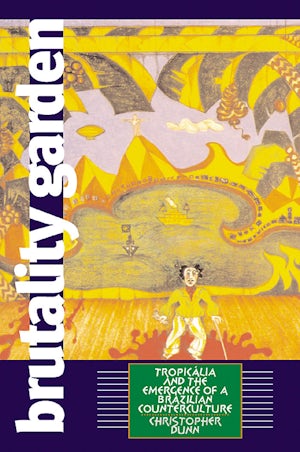
In the late 1960s, Brazilian artists forged a watershed cultural movement known as Tropicália. Music inspired by that movement is today enjoying considerable attention at home and abroad. Few new listeners, however, make the connection between this music and the circumstances surrounding its creation, the most violent and repressive days of the military regime that governed Brazil from 1964 to 1985. With key manifestations in theater, cinema, visual arts, literature, and especially popular music, Tropicália dynamically articulated the conflicts and aspirations of a generation of young, urban Brazilians.
Focusing on a group of musicians from Bahia, an impoverished state in northeastern Brazil noted for its vibrant Afro-Brazilian culture, Christopher Dunn reveals how artists including Caetano Veloso, Gilberto Gil, Gal Costa, and Tom Zé created this movement together with the musical and poetic vanguards of São Paulo, Brazil’s most modern and industrialized city. He shows how the tropicalists selectively appropriated and parodied cultural practices from Brazil and abroad in order to expose the fissure between their nation’s idealized image as a peaceful tropical “garden” and the daily brutality visited upon its citizens.
Hello, Hello Brazil: Popular Music in the Making of Modern Brazil by Bryann McCann

“Hello, hello Brazil” was the standard greeting Brazilian radio announcers of the 1930s used to welcome their audience into an expanding cultural marketplace. New genres likesamba and repackaged older ones like choro served as the currency in this marketplace, minted in the capital in Rio de Janeiro and circulated nationally by the burgeoning recording and broadcasting industries. Bryan McCann chronicles the flourishing of Brazilian popular music between the 1920s and the 1950s. Through analysis of the competing projects of composers, producers, bureaucrats, and fans, he shows that Brazilians alternately envisioned popular music as the foundation for a unified national culture and used it as a tool to probe racial and regional divisions.
McCann explores the links between the growth of the culture industry, rapid industrialization, and the rise and fall of Getúlio Vargas’s Estado Novo dictatorship. He argues that these processes opened a window of opportunity for the creation of enduring cultural patterns and demonstrates that the understandings of popular music cemented in the mid–twentieth century continue to structure Brazilian cultural life in the early twenty-first.
 MAIS QUADRIL!